




Sovereign cloud infrastructure for meteorology services
CloudFerro enables turning meteorological data into reliable forecasts and climate insights.


Resilient Data Infrastructure for Meteorology
Climate change, unpredictable weather, and extreme events are increasing the need for reliable meteorological services. At the same time, institutions face growing data volumes, cybersecurity risks, and geopolitical pressures. The challenge is not only processing more data, but building integrated environments for acquisition, storage, modeling, and dissemination - while maintaining control over infrastructure, compliance, and costs. Cloud is now a foundation for modern forecasting and decision support.
Key challenges:
- Growing multi-source data volumes (sensors, radar, satellites)
- Complex data integration for near real-time analysis
- High demands for HPC and AI-driven modeling
- Complex infrastructure management requiring resources and expertise
- Need to balance open data with security and sovereignty
- Ensuring resilience, compliance, and service continuity

CloudFerro sovereign cloud for meteorology and environmental services
CloudFerro enables meteorological institutions to transform rapidly growing observation data into reliable forecasts, climate intelligence, and early warnings through scalable, secure, and sovereign cloud infrastructure. The result is a practical environment for handling data-intensive services without carrying the full burden of on-premises infrastructure growth.

Scalable infrastructure
Built to handle rapidly growing heterogeneous datasets and service demand
High-performance computing
Enabling forecasting and AI/ML workloads at scale
Integrated data platforms
Unifying ingestion, processing, analytics, archiving, and dissemination
Sovereign secure infrastructure
Ensuring trusted European environments for mission-critical services
CloudFerro solutions for the Meteorological industry
CloudFerro provides a modular environment that can support operational meteorological services, research workloads, open data platforms, early warning chains, and advanced forecasting pipelines. Individual components can operate independently or together as one coherent Meteo service stack.
METEO Data Platform
METEO Long Term Archive
MeteoAI
METEO Mobile Center
METEO Data Platform
METEO Long Term Archive
MeteoAI
METEO Mobile Center
The METEO Data Platform is a sovereign, cloud-powered solution that transforms how meteorological data is managed, accessed, and used. It provides a secure, unified environment to integrate, store, and distribute data from multiple sources - such as satellites, radar, ground stations, and models - while ensuring full control and data sovereignty.
By combining scalable, high-performance infrastructure with ready-to-use data services, the platform accelerates processing, analytics, and application development. Users can efficiently build and deploy forecasting tools, AI models, and data-driven services without managing underlying infrastructure, while supporting collaboration across institutions and sectors.
With advanced forecasting and early warning capabilities, the platform enables faster, more accurate decision-making—helping organizations anticipate risks, respond effectively, and strengthen resilience.
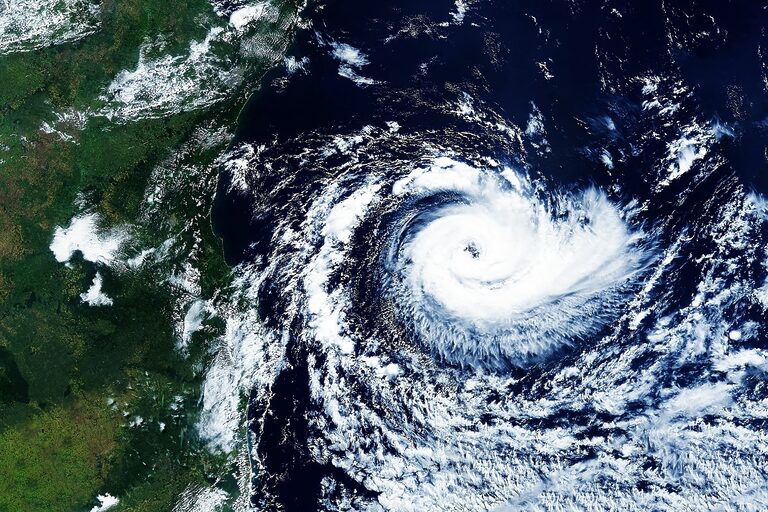
- Sovereign cloud platform for unified METEO data management
- Scalable infrastructure for fast analytics
- Integrated environment for AI and forecasting
- Enhanced decision-making with early warning capabilities
The Long Term Archive (LTA) is a cloud-based solution designed for secure, scalable, and cost-effective storage of large volumes of meteorological data from multiple sources. It provides unified access to historical datasets while ensuring reliable long-term preservation, making it ideal for research, climate analysis, model validation, and compliance use cases.
Optimized for less frequent access, the archive layer combines durable storage with predictable retrieval performance, enabling organizations to retain and manage high-value data efficiently while maintaining full control over critical records.
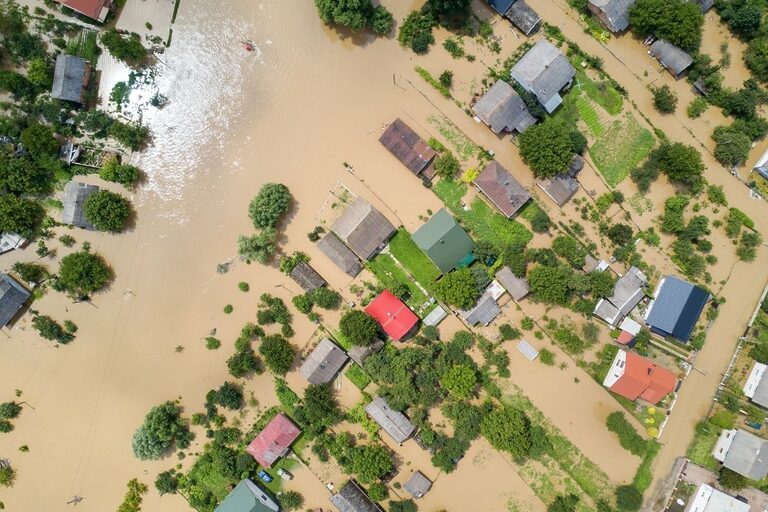
- Long-term storage for historical datasets
- Cost optimization for less frequent access
- Support for climate analytics and model validation
- Reliable preservation of high-value data
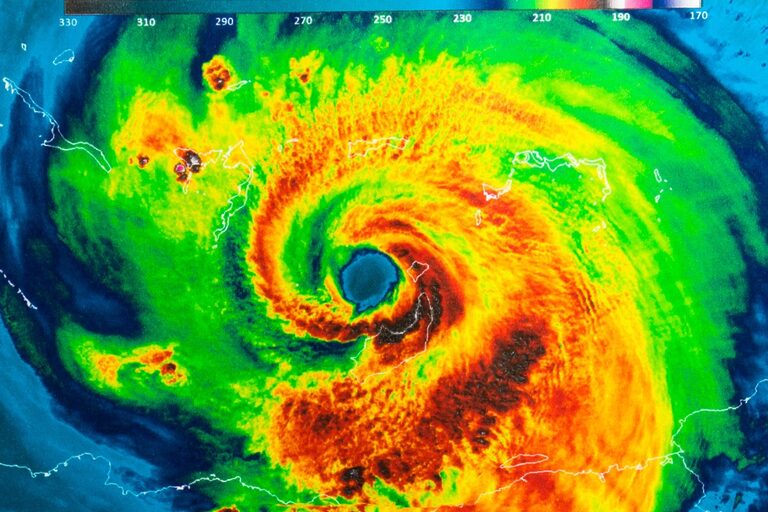
MeteoAI delivers operational AI services for meteorological data, focusing on the generation of model embeddings, anomaly detection in embedding time series, and the provision of curated, AI-ready datasets for training and evaluation.
The solution is built on high-performance computing (HPC) infrastructure designed to support advanced AI and machine learning workflows. It enables the full lifecycle of model development, including training, calibration, and execution of forecasting and analytical models. In addition, MeteoAI provides dedicated data repositories optimized for efficient access to high-quality training datasets.
- Operational AI for meteorological data analysis
- Embeddings and anomaly detection capabilities
- HPC infrastructure for AI/ML workflows
- Curated datasets for training and evaluation
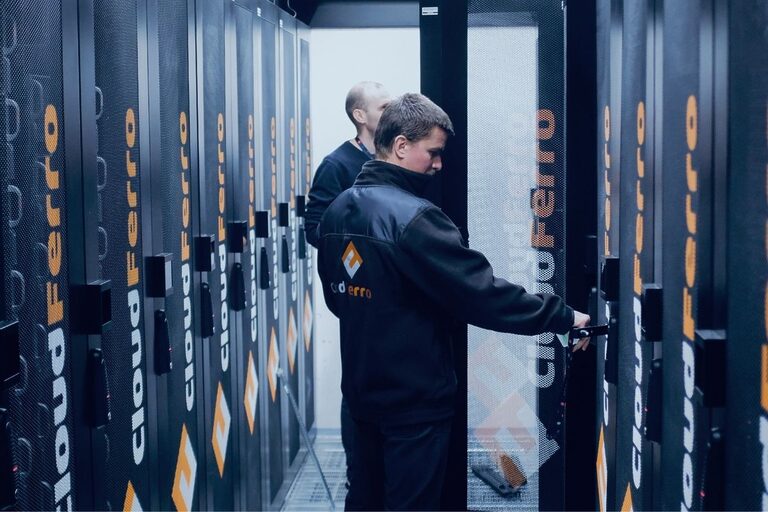
The METEO Mobile Center is a fully sovereign, secure, and self-contained solution designed for flexible deployment in the field. Delivered as a mobile, container-based unit, it supports storm chasers, rapid response teams, and other mission-critical operations requiring immediate access to meteorological data, processing capabilities, and communication systems in remote or dynamic environments.
Built for resilience and independence, the Mobile Center operates without reliance on fixed infrastructure, enabling fast deployment wherever needed. It also provides a practical alternative to traditional facilities, reducing the need for permanent buildings and associated permits, while saving valuable office space and ensuring operational continuity in any conditions.
- Mobile, container-based METEO deployment unit
- Sovereign and secure field operations environment
- Rapid deployment without fixed infrastructure
- No building requirements, saving office space
How institutions benefit from CloudFerro solutions?
CloudFerro provides a unified, scalable cloud environment tailored to the needs of meteorological and environmental services. It enables institutions to efficiently manage data, run advanced analytics, and ensure secure, reliable operations across the full service lifecycle. By moving infrastructure management to the cloud, institutions can free up skilled experts to focus on scientific research, AI, and advancing forecasting capabilities.
National meteorological and environmental institutes
Better control over strategic infrastructure, improved ability to scale forecasting and dissemination services, and a resilient foundation for operational continuity in critical public workflows.
Research teams and scientific programs
Access to large repositories and scalable compute in one environment, reducing the friction of running experiments, validating models, and working with historical and real-time datasets.
Public-sector and international organizations
Support for open data exchange, interoperable service delivery, and secure environments aligned with regulatory and institutional requirements.
Teams developing AI and next-generation forecasting services
A practical platform for training, calibrating, and running AI/ML workflows without building separate infrastructure for each new initiative.
Use cases
CloudFerro solutions support a wide range of meteorological workflows, from real-time data processing to long-term archiving and advanced analytics. They enable organizations to build integrated, scalable environments for forecasting, research, data sharing, and early warning services.

Operational forecasting platforms
Run services for processing, modeling, visualization, and delivery of operational forecasting products in a scalable cloud environment.
Open data repositories and dissemination
Provide robust access, exchange, and distribution of high-value meteorological and environmental datasets for institutions, partners, and downstream users.

AI/ML for forecasting and analysis
Train, calibrate, and run machine learning workflows using large observational and model datasets in HPC-enabled environments.
Long-term archive and climate analytics
Store and retrieve historical datasets efficiently to support climate studies, trend analysis, validation, and regulatory or research needs.

Compliance and security
In the Meteo sector, infrastructure must remain trustworthy under operational pressure. CloudFerro combines a European operating model with recognized security standards, resilient infrastructure design, and open technologies that reduce black-box risk in sensitive environments.
European sovereign infrastructure
Full control within EU jurisdiction, independent from foreign oversight
Granular access control
Precise management of data access and usage policies
Compliance with EU regulations
Aligned with GDPR and European data protection requirements
Certified security standards
Certificates: ISO 27001, 27017, 27018 and other recognized frameworks
High-level security clearances
NATO and EU Facility Security Clearance Level III
Transparent, open technologies
Open-source foundations reducing vendor lock-in and black-box risks
Pilot deployment
Start with a pilot that validates the architecture and the service model. In many cases, the best first step is a pilot focused on one or two priority workloads such as dissemination, archive, forecasting support, or AI/ML.
Pilot steps:
- Assess the operational, data, and security requirements.
- Select the target workflow, such as dissemination, archive, forecasting support, or AI/ML.
- Configure the cloud environment, security model, and integration scope.
- Run the pilot, validate results, and define the next implementation stage.
Trusted by Europe’s Leading Institutions
CloudFerro brings proven experience in delivering cloud services to leading institutions such as ECMWF and EUMETSAT, supporting data-intensive public and environmental operations. Its expertise includes building and operating large-scale data platforms and repositories, combined with extensive experience in serving European research and public-sector ecosystems.