





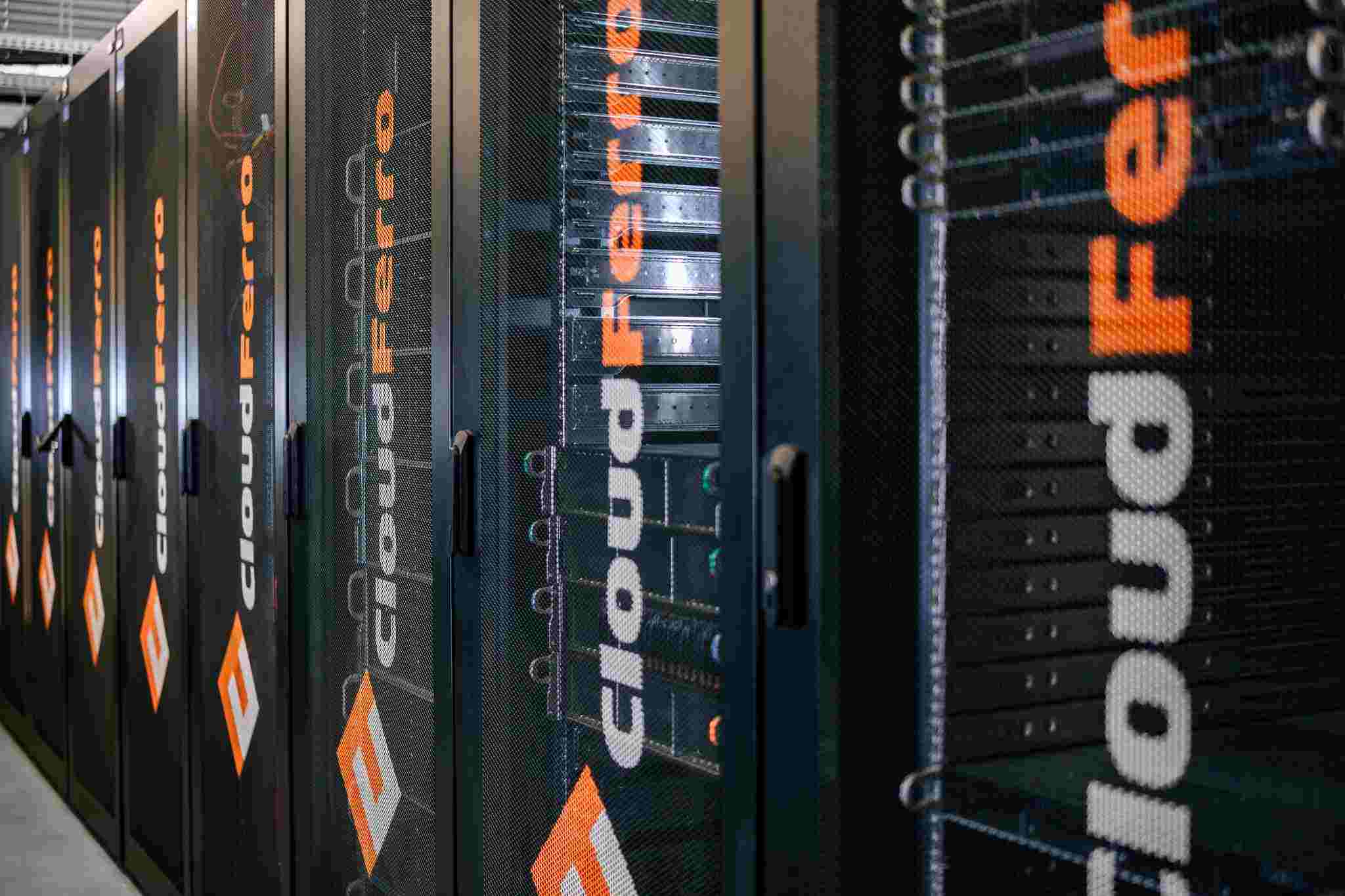
Sovereign Digital Infrastructure for Defence
Full control and data security. Rapid deployment.
Operations in air-gapped and disconnected environments.


Security without compromise
The defence sector increasingly relies on digital infrastructure supporting command and control, ISR, cyber operations, data processing, and mission coordination. Organizations operating in this domain must meet stringent requirements for security, data sovereignty, interoperability, and continuity of operations - while also enabling rapid deployment of new capabilities. Critical systems and strategic data must remain under full control of national institutions.
The required infrastructure must ensure:
- operation in air-gapped and disconnected environments, without reliance on external systems,
- full control over classified data, access, logs, and encryption keys on the user side,
- high resilience and the highest cybersecurity standards,
- independence from technologies subject to foreign jurisdictions,
- rapid deployment and infrastructure portability.
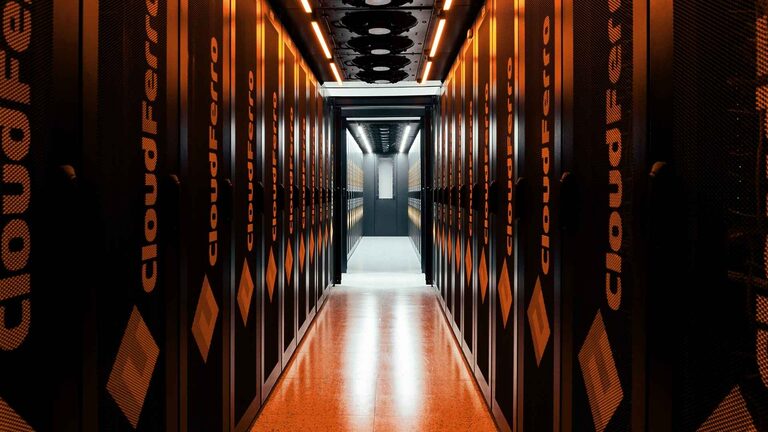

Data and infrastructure for Multi-Domain Operations (MDO)
Modern military operations require flexibility, mobility, and the ability to operate across multiple domains simultaneously - land, air, sea, cyber, and space.
Information advantage is critical: fast access to data from multiple sources, efficient analysis, and rapid decision-making. Today’s challenges include fragmented systems, data silos, and communication limitations. Modern cloud infrastructure helps overcome these barriers by enabling interoperability, scalability, and secure access to data in near real time.
Cloud computing for armed forces
Cloud computing has become the foundation of modern digital infrastructure, supporting data processing and storage, rapid service deployment, and the development of analytics, AI, and geospatial solutions.
In the public and defence sectors, private and sovereign clouds are particularly important, ensuring full control over data and infrastructure resilience. However, standard cloud solutions do not fully meet the requirements of military operations.
In environments with limited connectivity and high mobility, infrastructure must operate independently of external systems and synchronize data when conditions allow. This approach enhances efficiency, security, and interoperability in multi-domain operations.

CloudFerro sovereign infrastructure in practice
CloudFerro supports the development of secure digital capabilities by providing sovereign, resilient, and deployable cloud environments for military and public sector organizations operating in air-gapped, disconnected, or communication-constrained environments. The company delivers proven implementations at a European scale and is a trusted partner of European institutions.

Sovereignty
Polish jurisdiction, operations, and data residency in Poland - reduced exposure to non-EU legal risks. Full control over classified data, access, logs, and keys on the user side
Security
Highly resilient infrastructure and top-tier security standards
Operations in disconnected environments
Private cloud infrastructure ensuring continuity in isolated or intermittently connected environments, with data synchronization when possible
EO/ISR processing
Secure environments for processing imagery and ISR data, with local data retention and support for classification, prioritization, and intelligence product delivery
AI and geospatial analytics
Scalable resources for AI, geospatial analytics, and aggregation of large volumes of diverse operational data
Speed of deployment
Faster deployment of digital capabilities through modular and portable infrastructure
CloudFerro solutions for the defence sector
Bastion
Fortress
Hydra
Mobile Multi-Sensor Analysis Center
Multi-sensor Analysis Center – enhanced certification
Multi-domain operational cloud for decision advantage
CloudFerro Bastion is designed to support armed forces operations in air-gapped, disconnected, and low-connectivity environments. It enables secure and continuous data exchange and coordination across infrastructure elements, supporting faster and more resilient multi-domain operations.
The solution delivers a private cloud in a containerized, modular data center. It provides local compute resources, data storage, and an environment for cybersecurity services, data analytics, and operational tools. Thanks to its modular architecture, Bastion can be deployed both in data centers and in mobile environments, including fully disconnected modes.

- Ready for air-gapped and disconnected environments
- Modular, rapidly deployable private cloud architecture in a container
- Local data processing and storage
- Support for cybersecurity, data analytics, and multi-domain operations
CloudFerro Fortress is a solution designed for the defence and security sector, ensuring full control over infrastructure, data, and administrative access. It is a Bastion-based solution undergoing security accreditation for ICT systems in accordance with defence ministry regulations and NATO standards.
It operates as a physically isolated, air-gapped private cloud deployed at a customer-designated location, within a TEMPEST-compliant container. The solution includes secured compute and storage resources, isolation from external networks, and full auditability of operations. It enables mission execution in environments with the highest security requirements and where the use of external infrastructure is not permitted.

- Reinforced security architecture
- Isolated private cloud for sensitive environments
- TEMPEST-compliant container
- Full control over access, logs, and operations
Multi-domain operational clouds (MDOC) provide a conceptual framework for integrating diverse information spaces to enable decision advantage and support multi-domain command and control. To fulfill this role, military cloud infrastructure and its supporting network must be capable of self-organization, self-healing, graceful degradation under adverse conditions, and maintaining appropriate levels of redundancy.
A military multi-domain operational cloud (MDOC) is a data processing environment designed to support operations conducted simultaneously across land, air, sea, space, and cyber domains. It enables secure integration, processing, and distribution of data from multiple sources - including ISR systems, sensors, satellite data, UAVs, motion and acoustic sensors, and others - in near real time.
Hydra, as a properly configured network of “Bastions,” provides the foundation for building MDOC capabilities.

- Architecture for interoperable multi-domain operations
- Ready for operation in disconnected environments
- Leverages AI and advanced analytics
- Supports situational awareness and decision-making
Use cases
CloudFerro solutions can support daily operations of Ministry of Defence units such as imagery intelligence centers, cyber defence command units, and meteorological units at military airbases.

Imagery intelligence centers
Secure, disconnected processing pipelines for EO data, enabling classification, prioritization, and delivery of intelligence products - with full local data retention

Compliance and security
Pilot deployment
The best starting point is a pilot deployment to quickly validate assumptions and prepare the organization for scaling.
The process includes:
- defining the deployment model (isolated, disconnected, intermittent connectivity, or online),
- selecting 1–2 priority use cases (e.g. EO processing, meteorological data continuity, cyber exercises),
- executing the pilot with documented operations, governance rules, and audit results.
CloudFerro experience validated through cooperation with European institutions
Selected projects delivering complex solutions for demanding organizations and European-scale initiatives.

CREODIAS
CREODIAS is a cloud computing environment with an integrated repository of Earth observation satellite data, developed under the Copernicus programme.

